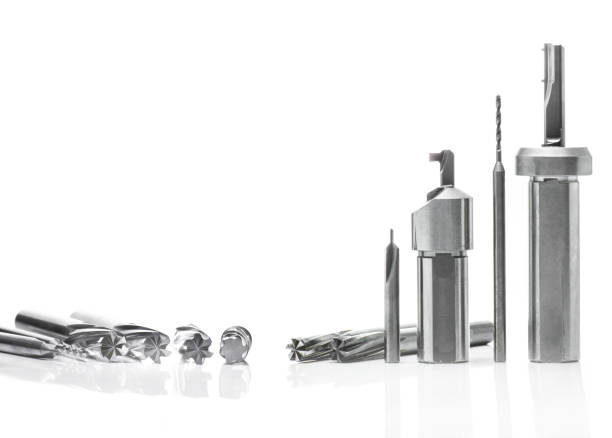
Be aware of the materials features of the tool and its capability to cut certain material when selecting one. We will discuss the K component chemical stability, the side cutting edge angle and other factors.
It is possible to get high-quality results by using the right equipment, for instance a straight or pencil grinder. Here are some of the most important factors you should consider when selecting a cutter. If you're unsure about the tools you need, consult your machine shop for recommendations. In case where you aim to learn new information about tools, you have to check here at https://www.sundicuttingtools.com/products/pcd-milling-tools-end-mills/ site.
1. Material Property
Material properties are essential for machining processes of all kinds. Unlike knives, these tools must withstand high temperatures without losing their cutting edge. They also have to resist the effects of abrasion and adhesion, as well as possess thermal conductivity.
These factors are crucial for an optimal performance of cutting instruments. In this article, we'll discuss the material properties of cutting tools in order to comprehend their use and longevity.
The process of production is based on the cutting tool's life expectancy and its speed. The life of the cutting tool is influenced by several factors, including the rate of feed, geometry of the tool and wear on the tool. The factors mentioned above will affect tool performance and prolong the life of your tool.
A good cutting tool will last for many hundreds of thousands of uses. The lifespan of any cutting device is determined by its speed at which it can cut various materials. Cutting equipment must be durable and have high cutting speed. Therefore, being aware of feeding speed and cutting rate prior to purchasing a new machine is essential.
2. K Factor
The K factor of cutting tools describes the form of the cutting edge. The cutting edge is a function of a variety of factors, such as the material, the machining method, as well as the type of material used.
The most common method of evaluation is by cutting speed of 35 milliseconds. Fig. shows the measurement area on the cutting edge. 1. The dimensions of both Sa and Sy can affect the force and heat loads.
In order to determine the K factor of cutting tools, the tool comprises of iron, alumina, and an abrasive. Its K factor is influenced by the contact length a and the inclination g. The more the rake angle g increases, the objective roughness of the function increases.
The higher the roughness of the objective, the more complicated the materials are. If the K value is higher, then it means that your cutting device isn't functioning properly.
3. Chemical Stability
CBN-based cutting instruments are constructed from a specialized material. They also resist high temperatures and exhibit outstanding thermal stability. They are usually classed as high or low-c-BN. Low-cBN tools do not contain CBN while the high-cBN ones contain between 75 and 95 volume% boron-nitride, along with metallic binder.
While oil-based lubricants are the most widely used cutting fluids, their characteristics aren't as impressive. In addition, they are expensive and cause significant smoke, which is unsuitable for the modern manufacturing. The EP additives and mineral oils can be mixed to make greases with low viscosity. The combination results in an excellent lubrication and longer the life of your tool.
4. Side Cutting Edge Angle
Back rake angles determine the angle of a tool's cutting edge. The angle is calculated between the surface of the cutting tool and the plane of perpendicularity. If the slope is down it is positive for the tool's tip and if it's up, the angle is negative.
The back rake typically is between 5 to 15 degrees. This angle is essential to understand when designing and fabricating a tool.
A cutting tool's rake angle is determined by the face of the tool and a line parallel to the tool's base. The angle decreases friction between the tool and the workpiece. This results in thinner, more excellent chips.
Positive rake angles decrease the ability of heat conduction by the device and reduce the toughness of its cutting edges. Thus, rake angles that are positive work better with hard metals and alloys that are tough, whereas the negative angles work best for soft and brittle metals.
5. High Yield Strength At Operating Temperature
High yield strength is one of the most popular features associated with HSS tools. This kind of tool is designed to be loaded with the maximum yield force. However, it can create severe wear on the surface of the adhesive.
Cutting materials that are chemically aggressive will increase this wear. Along with the extreme adhesive wear, HSS cutting tools are also prone to blunting their edges due to high friction. The article examines the causes that influence the cutting tools yield and strength.
The working temperature of an instrument is the main aspect that affects the level of amount of heat generated by the tool. When the speed of cutting increases, the maximum temperature of an instrument will rise. This is because the heat that flows into the tool will affect the temperature of the material.
This is most noticeable with intermittent cutting. The operating temperature can play a significant role in determining the longevity of a tool and its quality. To further improve tool life and minimize heat generation it is necessary for the tool to to cut at a certain temperature.
6. Tools
Tool hardness is a measure of the ability of a material to withstand the heat, prevent plastic deformation and keep its toughness, even at very high temperatures. This also impacts wear resistance.
The ability of a tool to resist a cutting operation is influenced through its thermostability. The temperature of the material will be less during cutting, if it is equipped with more thermal conductivity. It is crucial to pick materials that are able to handle the high speed of cutting.
The quality of cutting tool materials is vital for industrial processes. It affects the amount of material to be removed, its final surface finish, the tolerance, and the cost to the producer.
Final Words
An industrial manufacturer could reduce the amount of the amount of scrap produced, increase production as well as improve quality of the part by selecting suitable tool material. This can ensure the effectiveness of their operations for the long term. When choosing the appropriate cutting material, the manufacturer needs to first determine the precise needs of the cutting application.